


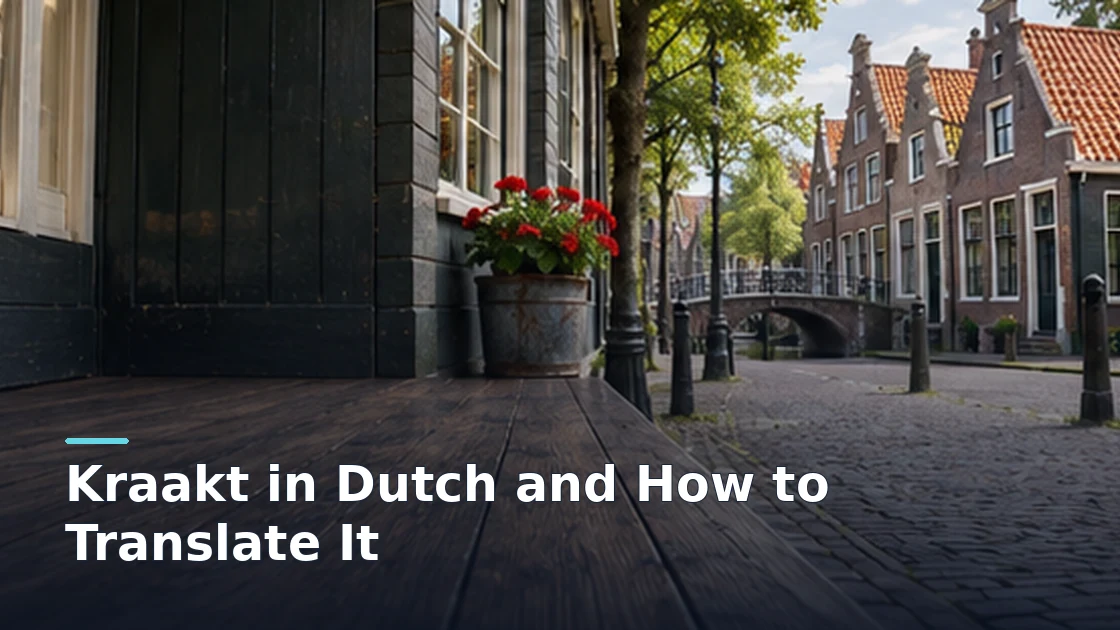
Kraakt is a present-tense form of the Dutch verb kraken. A floor that kraakt creaks. A person who kraakt a nut cracks it open. The translation changes with the thing making the sound or the object someone acts on.
What kraakt means when you hear a sound
If someone says De trap kraakt, the natural English translation is “The stairs creak.” The Dutch subject is de trap, which can mean the staircase as one object. English speakers often refer to “the stairs,” using the plural. The verb follows the grammar of the sentence in each language.
De vloer kraakt works the same way. It can refer to wooden flooring that creaks when a person walks across it. In an example about a shelf or other piece of furniture, the right English word could be “creaks,” “cracks,” or “crackles,” depending on the sound. The context determines whether the sound is occasional and sharp or drawn out. Trustify News’s wooden shelf guide covers the practical differences between common shelving setups, another place where a description of noises can benefit from a clear object.
In English, “crack” can suggest both a sound and the appearance of a break. Where a Dutch sentence is describing noise alone, translating it as “the floor cracks” can make the reader expect damage that the original sentence never mentioned. “Creaks” avoids that implication in many everyday examples involving wood.
When kraken takes an object
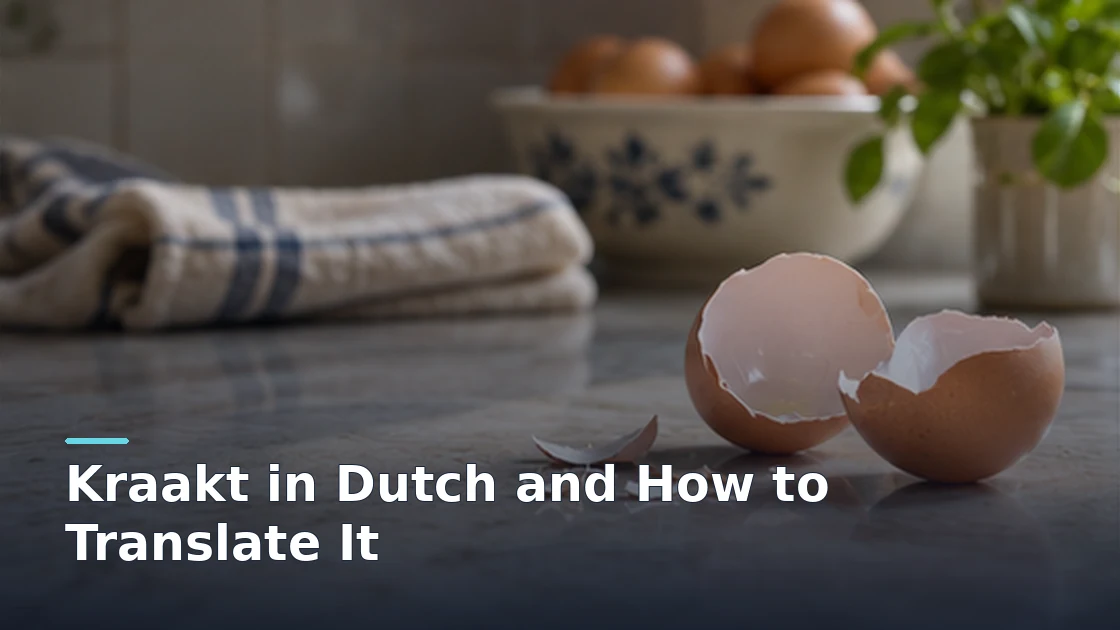
In Hij kraakt een noot, someone cracks a nut. The object after the verb tells us what is broken open. An eggshell, a nut, and other hard items can make short cracking sounds when they break. English can use “crack” in these examples without suggesting a longer creak.
The same verb appears in phrases about opening something secured. Een kluis kraken means “to crack a safe,” and een code kraken means “to crack a code.” The English and Dutch senses line up well there. Een pand kraken works differently. It refers to squatting in a building, so “cracking a building” would be unclear to an English reader. Identify the whole expression before translating.
There is also a use related to severe criticism. Dutch often uses the separable verb afkraken: De recensent kraakt het plan af means the reviewer pans or sharply criticizes the plan. The small word af can appear near the end. A dictionary lookup for the whole verb will explain why the meaning is different from the most familiar English sense of “crack.”
Why it sometimes appears without the final t
In ordinary present-tense statements, you get ik kraak, jij kraakt, and hij or zij kraakt. The plural forms use kraken. If jij follows the verb in an inverted question, the form usually loses its final t, as in Kraak jij die noot? A question with a third-person subject keeps it, as in Kraakt de trap?
If you are looking up a conjugated form, use kraken as the dictionary headword. A search for kraakt alone can bring up sentences using the word without telling you which meaning they illustrate. Looking up the infinitive makes it easier to compare meanings and to spot related verbs such as afkraken.

How to settle the translation in a real sentence
Read far enough to find the subject and any object. Decide whether the sentence describes a sound, a break, entry into something secured, or criticism. Then check nearby words, including small particles late in the sentence. In news or conversational Dutch, those clues usually narrow the translation quickly.
There is no advantage in making all examples use the same English word. Translating de trap kraakt, zij kraakt een noot, and hij kraakt het voorstel af as “the stairs creak,” “she cracks a nut,” and “he tears the proposal apart” gives an English reader the intended meaning in each case.
Two clues for reading headlines
In a headline about solving a mystery, a person who kraakt de code has figured out the code. A story about unauthorized occupation can instead use a form of kraken with a building as its object. Before choosing an English verb, read the first sentence to see what took place.
Pay attention to the article as well. De trap supplies the subject in the example about noise, while een noot supplies the object in the example about opening a shell. The grammar reveals what produces a sound and what someone acts on.
FAQs
Is kraakt a Dutch infinitive?
The infinitive is kraken. Kraakt is a present-tense form used with common second- and third-person singular subjects.
Can kraakt mean “breaks”?
Yes, when an object is cracked or forced open. If the sentence describes a floor or stair making noise, “creaks” is generally a better fit.
How do you translate afkraken?
When it refers to a proposal, book, or performance, it usually means to criticize it harshly, pan it, or tear it apart in a review.
