


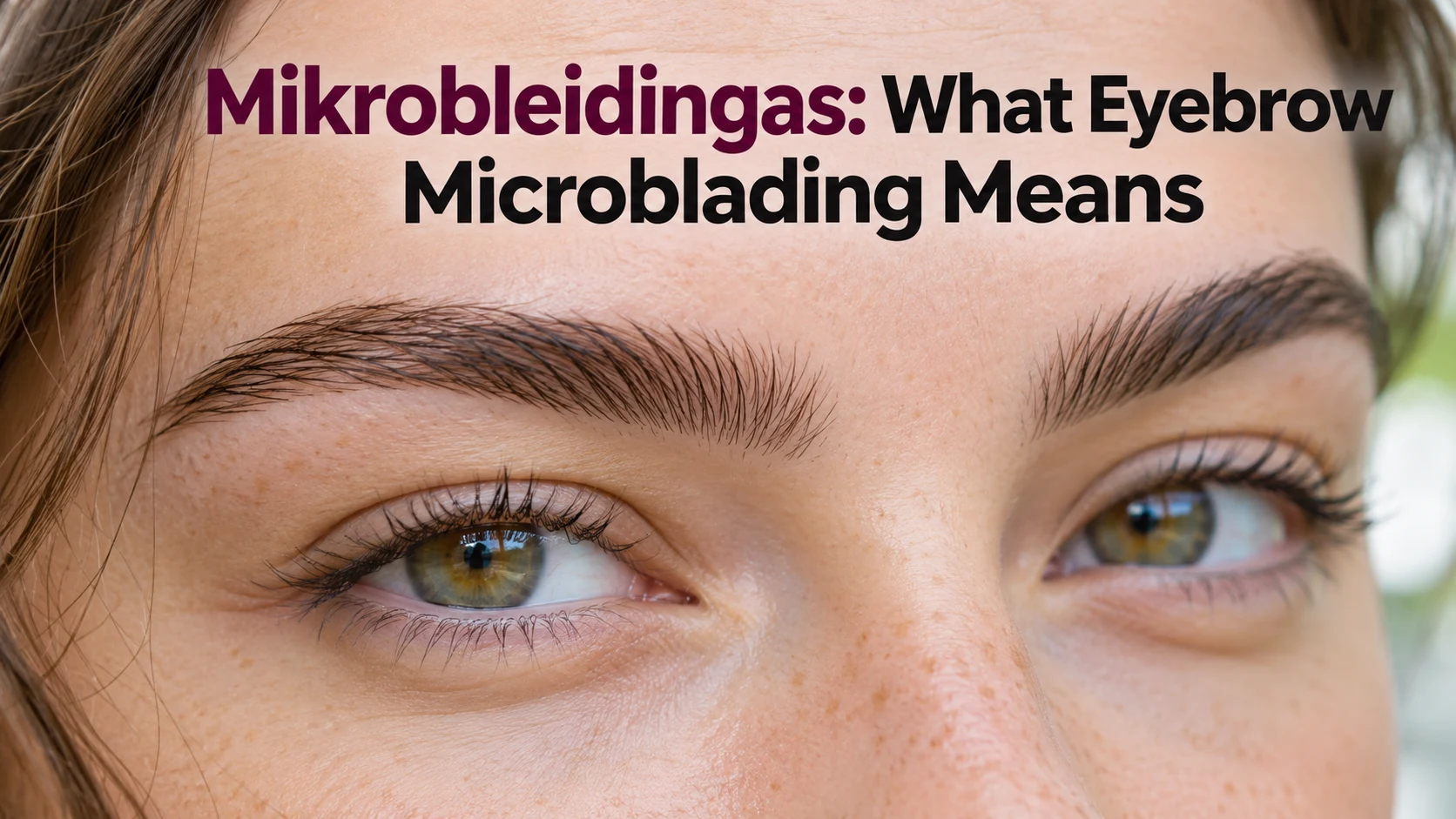
Mikrobleidingas is a Lithuanian rendering of “microblading,” an eyebrow technique that places pigment into the skin in fine strokes. Lithuanian providers often list it alongside other types of eyebrow micropigmentation. The terms tell you about the technique, so ask what a particular service includes before booking.
The result can look like individual brow hairs. What you see after healing depends on the way the strokes are placed, the pigment, your skin and the practitioner’s work. A photo taken as soon as the treatment finishes gives only an early view of the result.
How microblading differs from brow makeup
A pencil or gel changes the look of brows while it sits on the surface. In microblading, the practitioner uses a hand tool to make fine strokes and place pigment into the skin. The U.S. Food and Drug Administration discusses permanent makeup alongside tattoos because both involve inserting pigment into skin. Its consumer information notes risks such as infection and reactions to pigments.
The words microblading and micropigmentation can appear together on a service menu. Micropigmentation is a broader term. A Lithuanian provider’s description puts fine hair strokes, powder-style brows and shading under the same general area of practice. If you want a particular finish, ask the practitioner to describe the technique and show examples after healing.
What to ask at a consultation
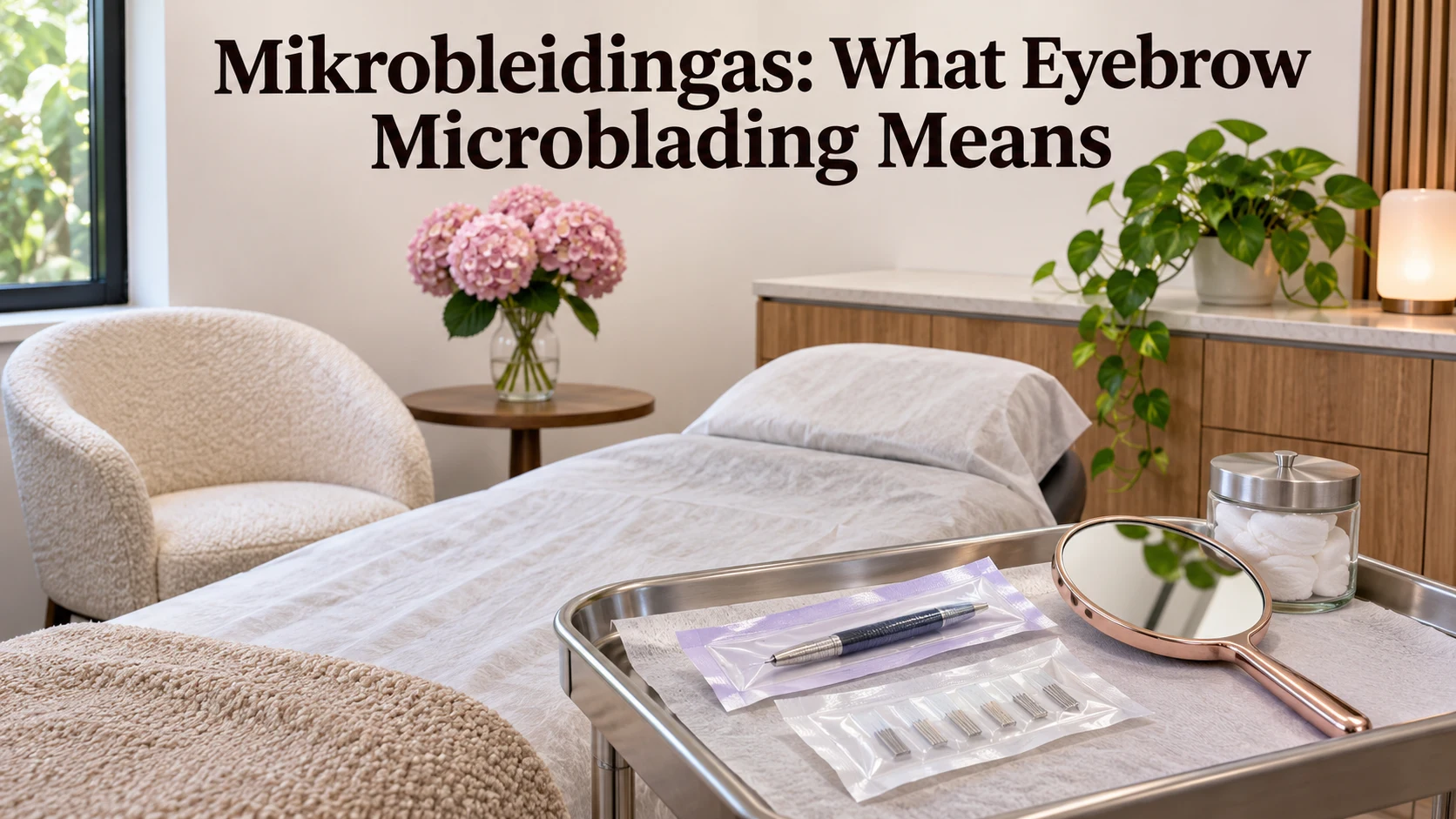
Ask who will perform the treatment and how the clinic handles hygiene. Ask what equipment touches the skin, which items are single-use and how the practitioner prepares the workspace between clients. Lithuania’s National Public Health Centre explains that beauty businesses in the country need a hygiene permit and sets out conditions for this work. If you are booking elsewhere, check the rules where the treatment takes place.
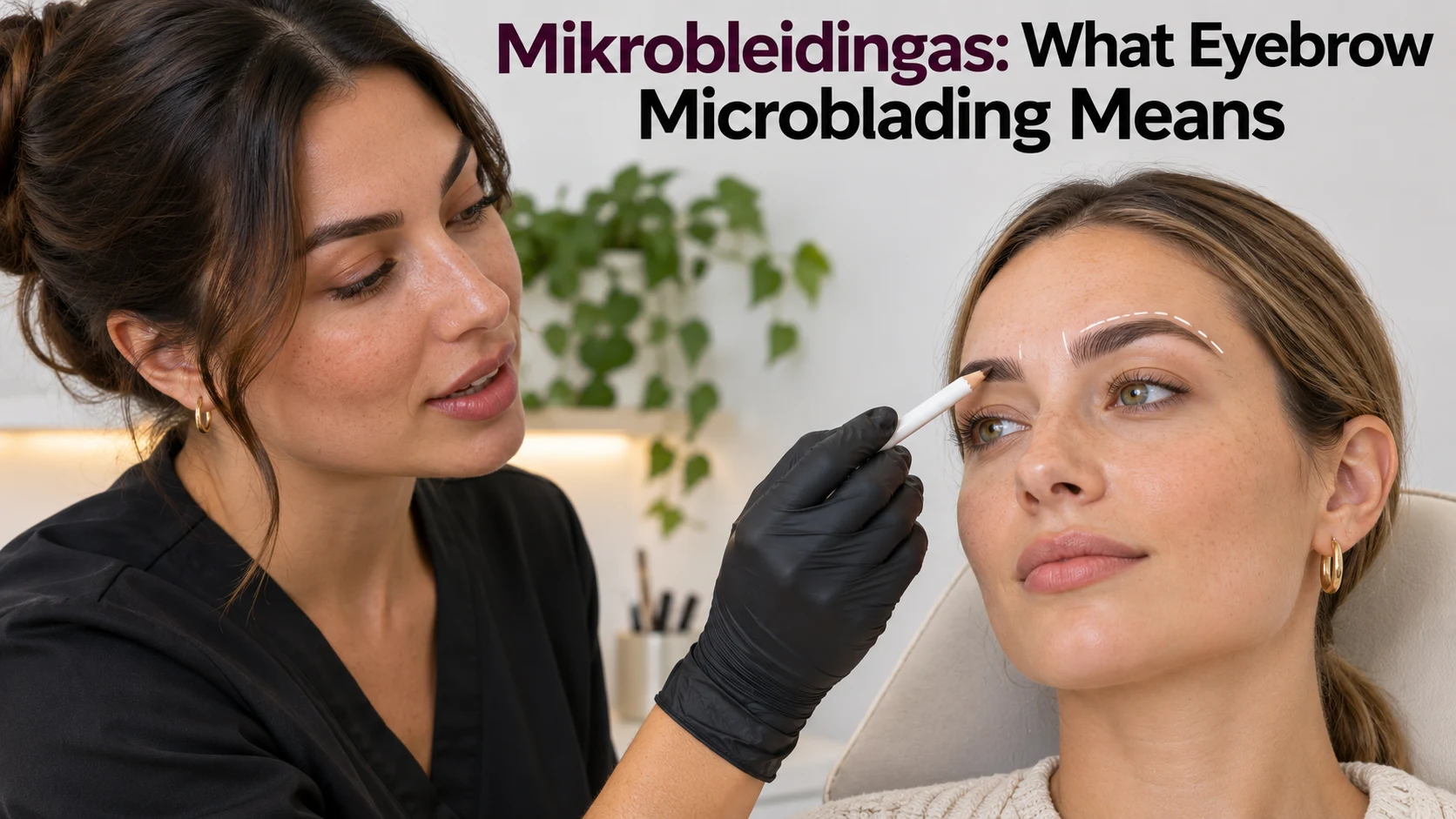
Discuss shape and colour before the treatment. A drawing or outline lets you see how the proposed brows work with your natural features while there is still time to adjust them. For a clear sense of the provider’s work, ask for healed examples on people with a similar starting brow shape and complexion. Compare photographs taken in ordinary light.
Ask whether the first price includes a follow-up visit and what happens if a touch-up is required. Find out which aftercare instructions the provider gives in writing and how to contact them if a concern arises. A provider should be able to explain these points before the appointment.
What to know about healing and fading
Practitioners may call the effect semi-permanent because the appearance can fade with time. Fading varies and does not give a predictable date when all pigment will disappear. Ask the provider about their experience with healed results and the options if you later want a different shape or colour.
Permanent makeup can be difficult to remove. The FDA also notes that contaminated inks or equipment can cause infections. If you experience concerning symptoms after a procedure, contact a healthcare professional. Tell them when the procedure took place and share any information you have about the pigment and aftercare products.
Names for cosmetic procedures can vary across languages and between salons. As in our guide to checking the meaning of an unfamiliar term, the surrounding context matters. A service menu, healed examples and the practitioner’s explanation can help establish what the name means in practice.
How to compare photographs and service descriptions
Look for pairs of pictures taken in similar light and at a similar distance. Close-up images are helpful for seeing the edges of individual strokes. A photograph from a normal speaking distance gives a better idea of how the brows frame the face. Both can be useful as long as the provider tells you when the pictures were taken.
Ask whether a portfolio picture shows hair strokes alone, shading or a combination. An eyebrow with both techniques may look different from a sample labeled simply “permanent makeup.” Ask whether the same person who completed the portfolio work will carry out your appointment. If you already have brow pigment from an earlier procedure, mention it at the consultation so the provider can address the colour and shape you have now.
Plan for the healing period before booking an appointment around a holiday or photograph. Your provider can explain what changes are common at each stage and what aftercare they require. If you have a health condition or take medicine that could affect healing, ask a healthcare professional about your own situation before the procedure.
Frequently asked questions
Is Mikrobleidingas the same as eyebrow microblading?
Yes. The Lithuanian wording refers to the eyebrow technique that uses fine, hair-like strokes to place pigment.
Are powder brows the same technique?
Powder brows usually describe a shaded effect, while microblading emphasizes fine strokes. Providers may offer combinations, so confirm the method and finish before booking.
Can I tell how it will look from a fresh photo?
A fresh photo shows the shape immediately after the procedure. Healed examples are more useful for seeing how the colour and strokes settle.
What should I check about the salon?
Check the local hygiene and licensing requirements, who will do the treatment, how equipment is handled and who to contact if a problem develops.
