



Baueren appears as a surname query in the genealogy database FamilySearch. Its surname page can point you toward types of historical records, including census records. Finding the exact name in an index is the start of a search. Establishing where a family lived, how its name was written, and whether two documents refer to the same person usually takes more than one record.
What the surname page can establish
A database search for Baueren establishes that there is a genealogy lookup page for the name. The aggregate number displayed near a search does not measure how many living people use that spelling. Search systems can return multiple records for a person, match variants, and find results from more than one country or time period.
Be particularly careful about a page that assigns an origin to a name without mentioning a source or a region. A similar spelling can provide a lead, especially if it appears in records from a place you have already identified. The appearance of a related-looking surname by itself does not show that a specific Baueren household came from that place.
For one family, the most useful result may be a full document with a place and date, such as a marriage entry or a census image. Those details give you other collections to check and relatives to compare.
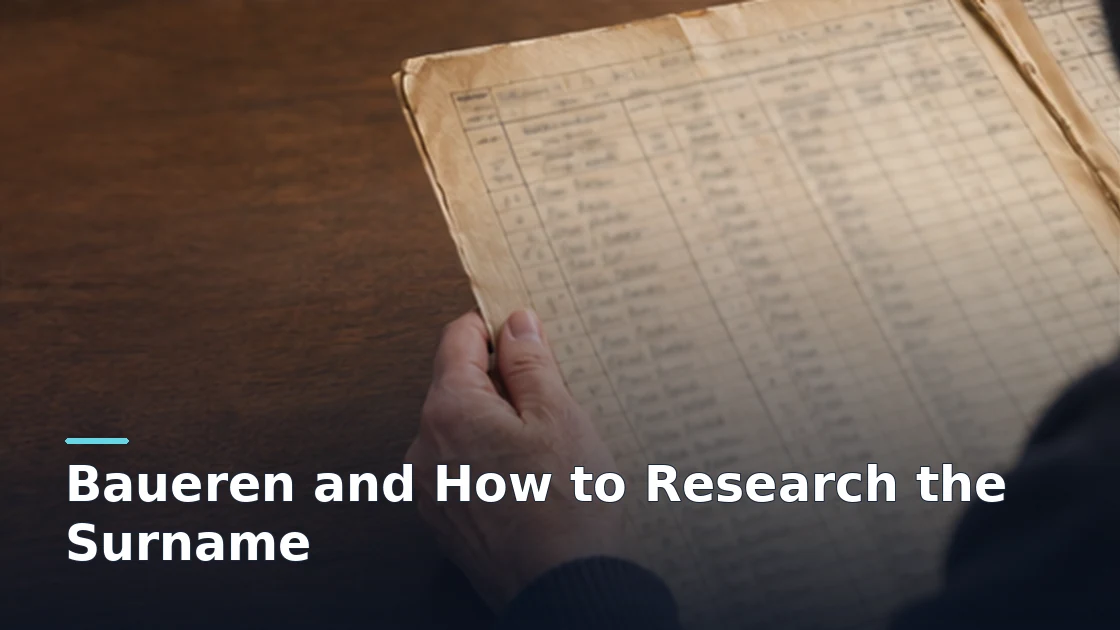
Start with a known person and work backward
Begin with the most recent person you can identify reliably. Write down the full name, approximate birth year, relatives, and locations you can verify. A street address or parish gives you a more precise target than a wide country search. If you have a city and a date range, you can often check local or regional collections before looking elsewhere.
Next, find a record that connects that person with an earlier date or another relative. A census may identify the people listed in a household. A marriage or baptism register may include parish details or the names of parents. Record what the source actually says. If an age conflicts with another source, record both ages and the dates when they were given.
There is value in looking for documents that were created close to the event. A birth register can be useful for a date of birth, while a later record may be better evidence of where someone was living at a particular time. Each new record can help answer a different question, even if a few details disagree.
Compare variants without merging unrelated families
Search with the exact spelling Baueren first. If you get too few plausible results, try a wildcard or omit the surname and search with a given name, place, and relative. FamilySearch’s historical record guidance also suggests searching for other household members and leaving fields blank if a tightly specified search returns too little.
Try several realistic ways the word might have been read or recorded. Handwriting can make sets of letters look similar. The clerk may have written the name the way it sounded. An indexer may have transcribed the entry differently from an earlier record. Compare a doubtful word with other words written by the same clerk where possible. Shape and position on the page can provide clues that a database transcription hides.
Use details outside the name to decide whether records match. If the town, age, occupation, and family members agree, a variant spelling may be plausible. If the only shared information is a surname, keep the entries separate until there is better evidence. That is especially useful when your search results include several households with similar given names.
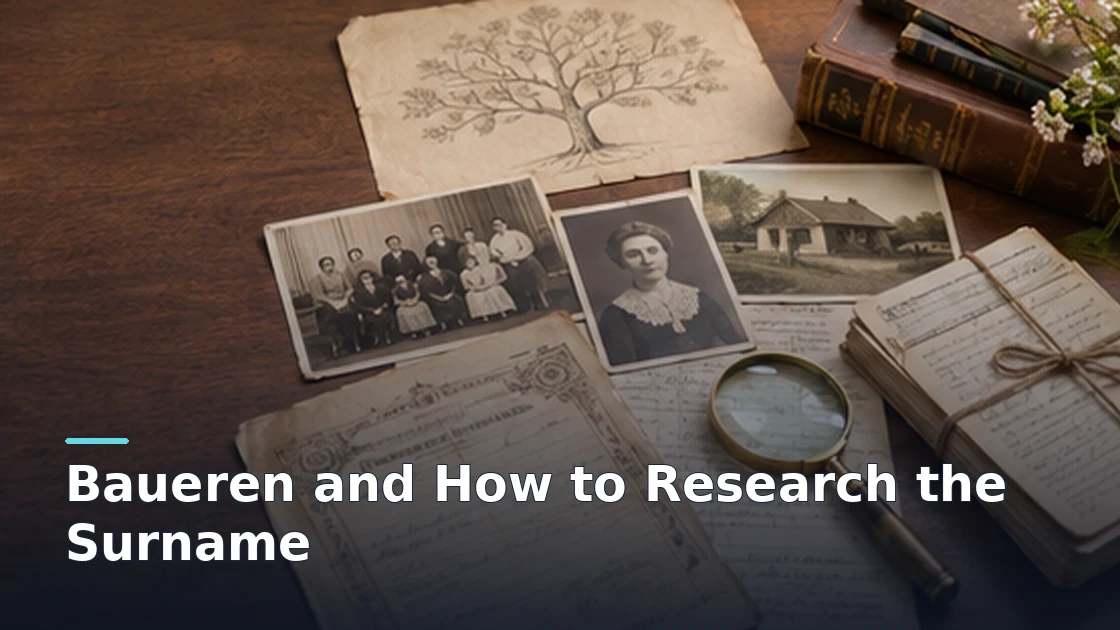
Read the historical record behind the result
An index lets you find a document, but the scanned image may show details omitted from the search result. Look for the heading, street, parish, witness names, and any marks connecting people on adjacent lines. Write down the collection name, place, page number, and any record identifier so you can return to the same image.
If no image is available, note where the index says the original came from. A local archive, civil registration office, parish, or record society may be able to identify the full register. Coverage varies by place, year, and collection. A search that returns no hits can reflect what has been indexed as much as who lived in a region.
Keep a record of unsuccessful searches
Save the collection, date range, place, and spelling for searches that turn up nothing. When a new document gives you a confirmed date or relatives’ names, revisit the searches where those details could change the result. This is a practical way to avoid entering the same broad query repeatedly.
If two people have near-identical names, create separate notes with the facts known about each. A later address, witness, or household member can give you evidence to link them or show why they belong on different branches. Treat uncertain relationships as provisional when sharing a tree.
When to check newspapers and obituaries
After finding a possible census or register entry, look for a newspaper that covered the town at the time. Obituaries and community notices can supply married names, nearby towns, and relatives who were living elsewhere when the notice ran. Trustify News’s Rutland Herald profile describes the archives and obituary coverage of one regional newspaper. For a family outside Vermont, look for an equivalent paper in the area where the record places them.
Start searching with a specific event and widen the date range if the first lookup returns nothing. Search for a spouse or sibling you can already identify. Names in older scans may be difficult for a search engine to read, so a date, street, or place name can be a more effective search term. If you find an obituary, compare the family links it names with civil records where those are available. Keep the newspaper clipping alongside the records that support it.
FAQs
Is Baueren a surname?
FamilySearch offers a surname search for Baueren. For a particular individual, look for a document showing that spelling or another spelling you can connect to the same person.
Does the FamilySearch result count show how common Baueren is?
It is a count displayed by a search service. It should not be treated as a census of people alive today or as proof that each result matches the exact spelling.
What if a record spells the name differently?
Record the spelling you see and check the date, place, relatives, and any identifiers on the document. Independent details help you decide whether the two names belong to the same person.

1 Comment
Pingback: Diuretický Meaning: What Diuretic Means