


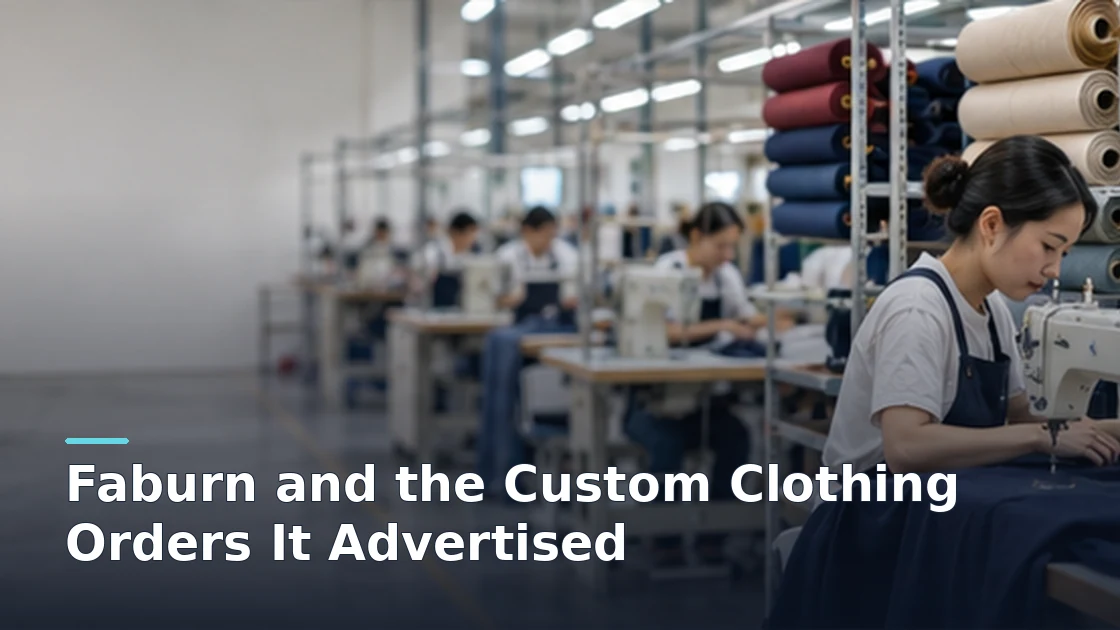
Faburn appears in startup and company profiles as a custom apparel business associated with Jaipur, India. The descriptions focus on bulk orders and making clothing to a customer’s specifications. Public profiles help identify the business, but leave important questions open about current availability, minimum quantities, and who would be responsible for fulfilling an order today.
What Faburn advertised
Faburn’s business profiles describe an apparel service for groups or businesses looking to order customized clothing. Startup directories classify it in textiles, and some public company listings refer to a website at faburn.com. A listing can remain visible after a website changes, a business pivots, or a team stops taking new work. Treat contact details in a directory as a lead to verify.
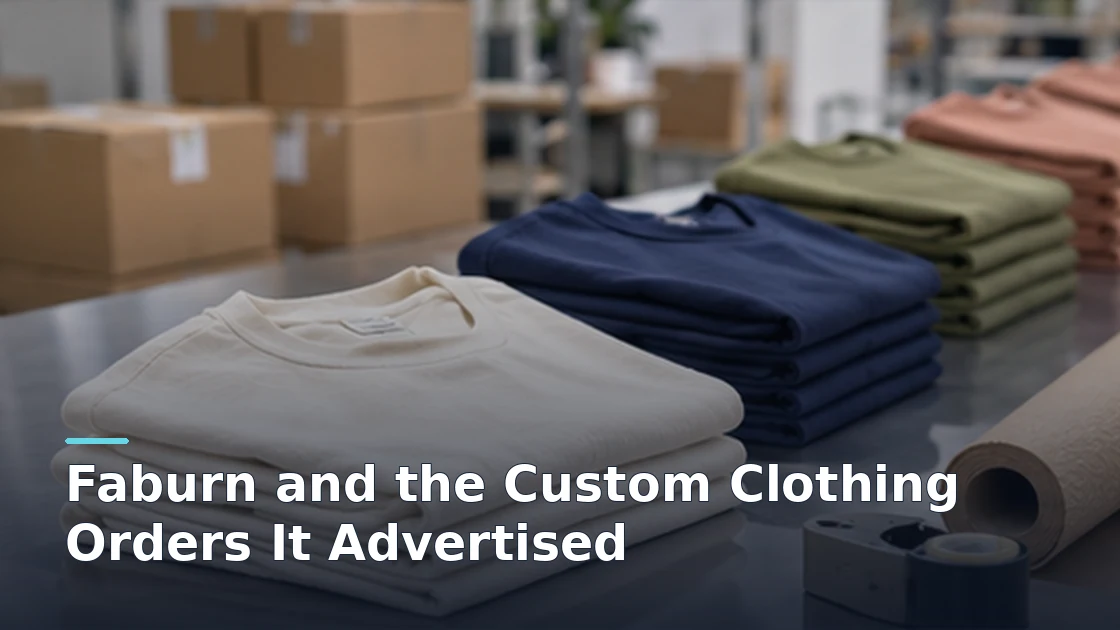
For a buyer, the useful distinction is between custom manufacturing and buying stocked garments. A stocked garment has already been made in a particular material, shape, and size range. A custom order can involve using a standard blank and adding artwork, or it can involve making garments to a new size and material specification. The phrase “custom clothing” can cover both jobs, which have different prices, timelines, and sampling needs.
Published profiles describe how Faburn presented itself. They do not establish a live price list or a detailed production policy. The right document to use when considering a purchase is a current quote that identifies the business, its contact details, and exactly what it plans to supply.
What to put in a custom apparel brief
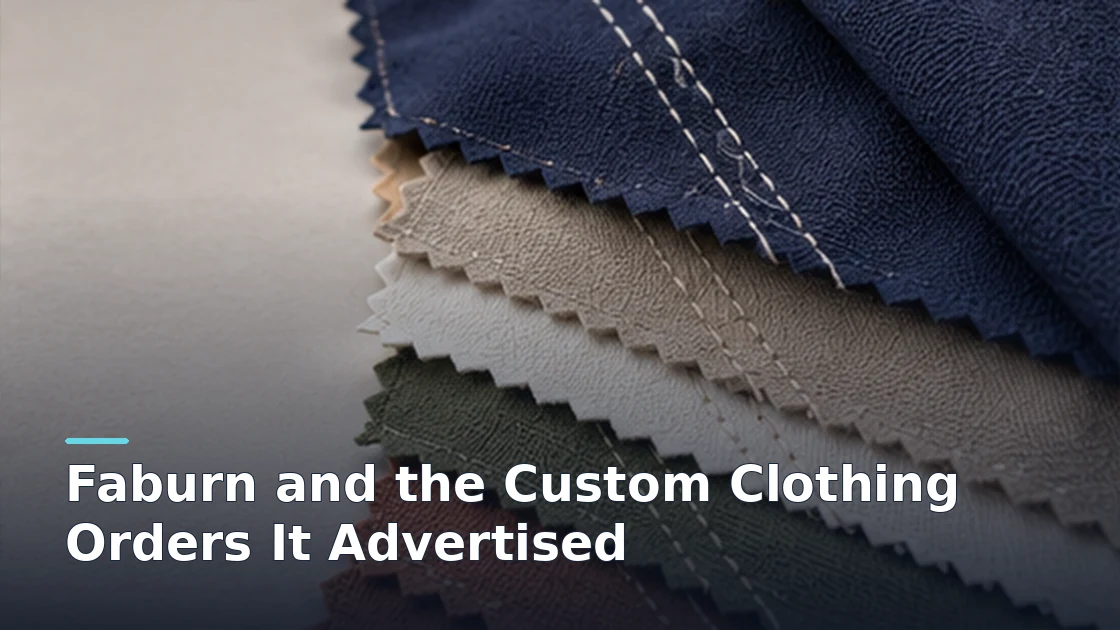
Start with the item that has to be delivered. “One hundred black T-shirts” leaves questions about fabric weight, cut, size distribution, labels, printing, packaging, and finish. Even the term black can cause a disagreement if the screen preview, fabric batch, and trim samples differ noticeably.
For a repeat run or a brand launch, ask whether the sample uses the intended production fabric and decoration method. A digital mock-up can show placement but cannot demonstrate how a print sits on material. Attribute any mismatch between mock-up and sample to a specific question, such as whether the graphic was printed at the approved dimensions or on the correct side of the fabric.
Before approving a sample, check the size chart against an item you know fits. Measurements such as chest width laid flat and body length are more useful than the letter on the label. If the garments are for an event, send the supplier the count by size along with the total quantity. Confirm how changes in the mix affect the quote.
Trustify News’s Hellstar coverage looks at the consumer-facing side of streetwear. The manufacturing brief comes earlier. It turns the ideas a shopper eventually sees in a label, cut, or print into specifications a production team can follow.
What a useful quote should spell out
Look for separate answers on quantity, unit cost, sample charges, delivery, and defect handling. A low per-unit figure can look quite different once design setup, taxes, freight, or packaging are included. Ask whether the quote covers each size and color as a single run or applies a separate minimum to each variation.
A production date is another place where wording matters. If a supplier quotes two weeks, ask what starts the clock. The clock might start when a deposit arrives, when a sample is approved, or when the factory receives the fabric. For a fixed launch date, request the date when the whole shipment is due to leave the workshop and the expected arrival date at the delivery address.
The terms for damaged or incorrect items should also be written. A replacement run may take longer than the original order, especially if the preferred fabric or color is unavailable. List the measurements and tolerances that count as defects so both parties have an agreed standard.
How to check who would fulfill an order
First match the legal name on the quote with the destination listed for payment. If the supplier provides a GST identification number for an Indian transaction, verify the number and registered business details through the official taxpayer lookup. A matching registration helps establish who is invoicing. It does not prove product quality or predict delivery.
Second, use current contact information and ask who handles production and quality control. A supplier that coordinates multiple workshops can still deliver the exact garments ordered. Understanding who handles each stage helps if a sample changes or a deadline moves.
Finally, ask for a written ordering and revision process. Record which details you approve, keep a dated copy of the specification, and ask for a fresh confirmation if anything material changes between the sample and the production run.
Decide what the sample needs to prove
A sample should answer the questions that could make the order unusable. A sports group may care about range of motion and consistent sizing. A clothing brand may care more about how a graphic sits after washing. If packaging matters to retail customers, check a packed sample as well as the garment.
Request the exact material specification if appearance or feel is part of the order. A buyer comparing two quotes should ask whether both suppliers included the same decoration technique and garment construction. Otherwise a lower quote could simply reflect a different product. File the supplier’s sample notes with the approved artwork so the team can compare the final delivery against both.
FAQs
Is Faburn a clothing label or a supplier?
The public profiles describe custom clothing and bulk-order services. That points to a supplier model. Check a current quote or business channel for the services actually available.
What is Faburn’s minimum order?
The publicly available profiles do not establish a current minimum. Give the supplier the style, decoration, colors, and size mix. Each can affect the smallest run the supplier will accept.
Can a company profile verify a supplier?
A company profile can match a name to an industry or location. For a purchase, use the supplier’s current legal and billing details, written production terms, and a sample where appropriate.
